
e-GP Guide
How AI Is Changing Procurement and Tender Discovery (B2B Angle)
How AI Is Changing Procurement and Tender Discovery (B2B Angle)
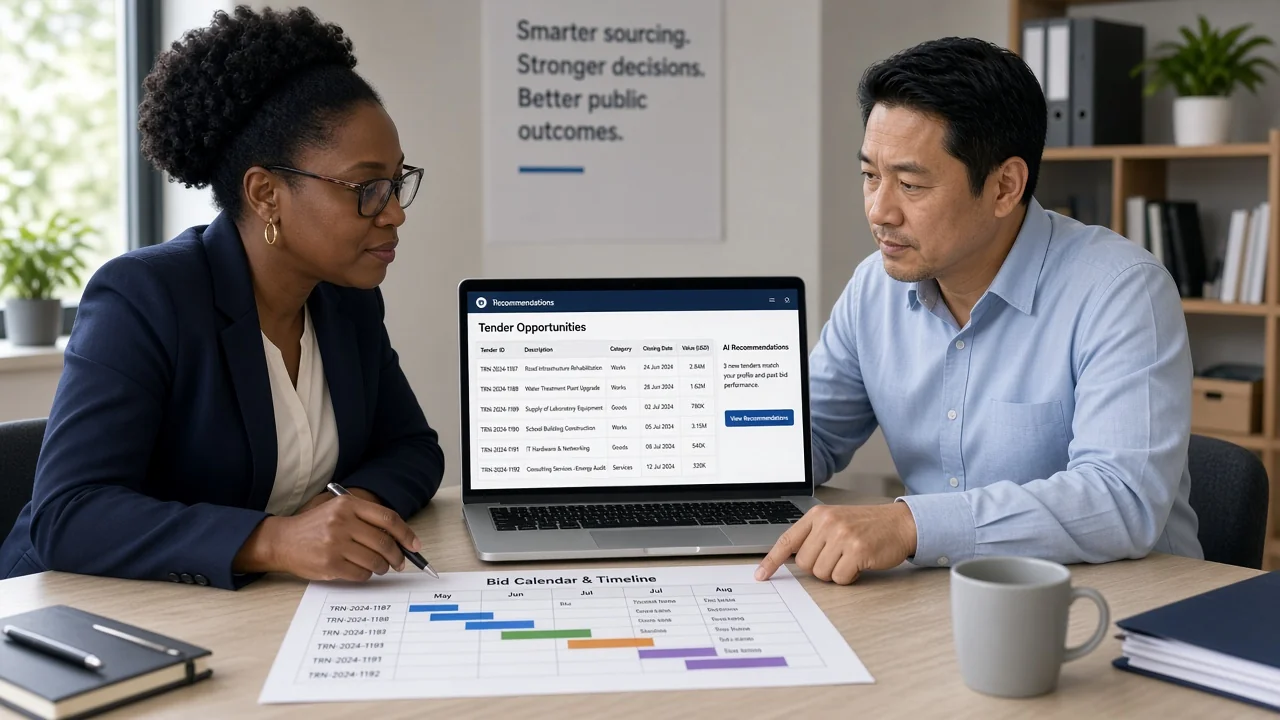
Buyers used to miss tenders because someone did not read the gazette. Suppliers missed them for the same reason. AI procurement tender discovery is the new layer: alerts, keyword matching, draft replies, and sometimes automatic scoring of supplier PDFs. For SMEs it can mean more relevant opportunities — or more junk “matches” that waste bid time.
This is a B2B operations piece, not a careers piece.
What buyers are already doing
Large corporates and some public bodies use e-procurement portals. On top, tools summarise RFPs, extract must-haves, and rank suppliers from a database.
That means your company profile is a data record: categories, geographies, certificates, past performance. A pretty brochure that cannot be parsed is a disadvantage.
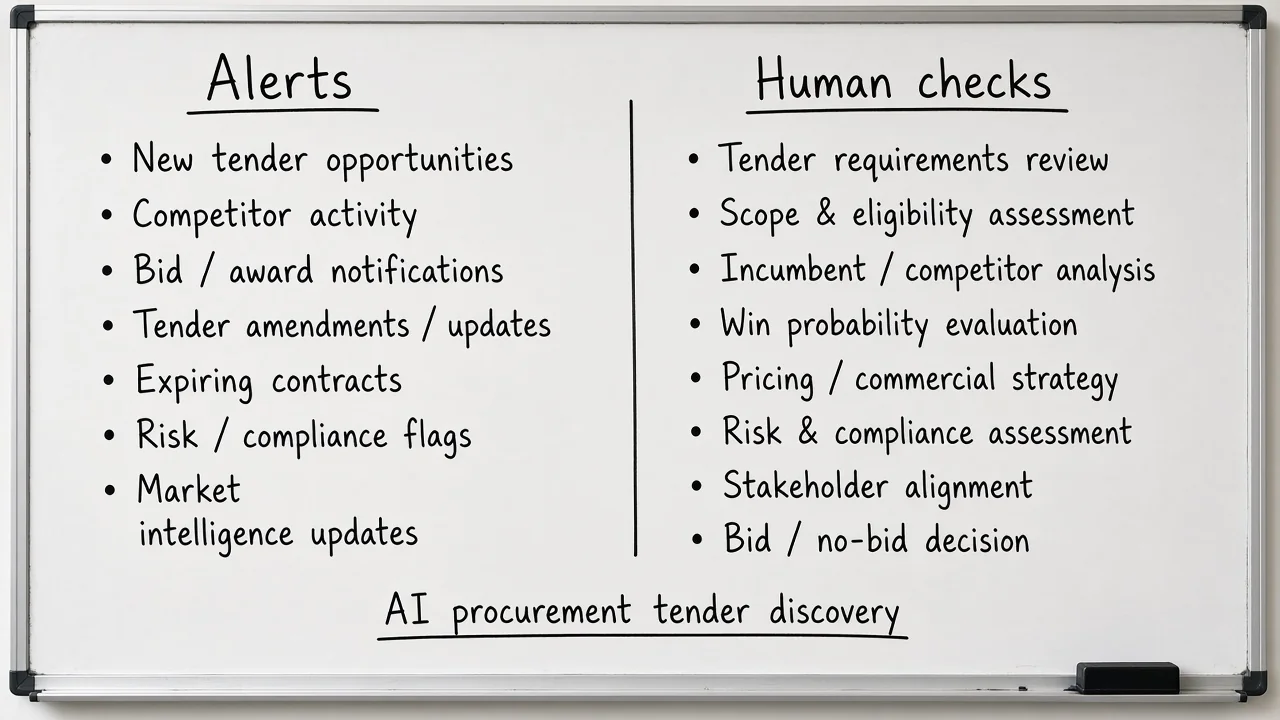
Buyers still (usually) keep a human on award, especially where law requires a committee. Do not assume a bot will sign a million-dollar PO unsupervised. Do assume a bot will *exclude* you if your category tags are wrong.
What suppliers can do without becoming a software company
- Watch more sources than one Facebook group
- Tag tenders by lot size and licence so you no-bid faster
- Draft a first-pass compliance matrix from the RFP (then a person checks)
- Keep a clause library (delivery, warranty, penalties) you actually accept
Do not auto-submit bids. Generated prices without a cost model are how you win a loss.
AI procurement tender discovery is a filter. Award is still a relationship plus a file.
Risks: hallucinations and leakage
A model can invent a closing date. Always click through to the official notice.
Pasting a full RFP with security annexes into a public chatbot can leak a buyer’s information and your pricing strategy. Use private tools or local files.
If a vendor promises they “know the evaluation weights,” that is not AI. That is a red flag.
What to automate in a small trade team
Week 1: one shared mailbox/portal log.
Week 2: keyword alerts (product + country + “tender/RFP”).
Week 3: a human 20-minute triage (eligible / maybe / no).
Week 4: templates for the maybes.
That is enough literacy. Buying an “AI procurement suite” before you have a log is theatre.
How to write a machine-readable supplier profile
Use the buyer’s nouns: UNSPSC or local category codes if they exist. List certificates with expiry. List countries you can legally serve. List factory vs trader (lying here explodes at audit).
Update when you add a line. Stale profiles generate bad matches and you will start ignoring alerts — the worst outcome.
Scoring, bias, and the no-bid muscle
If a buyer’s tool ranks you on keyword density, your bid writer will start stuffing. Resist. Evaluators still read (or at least spot-check). Stuffing is how you look like you do not understand the goods.
Bias: tools trained on past winners will love incumbents. If you are a new SME, your path is the lot that is too small for the incumbent, plus a perfect eligibility pack. AI procurement tender discovery will not invent a relationship. It will help you see the lot.
No-bid is a skill. Ten bad matches a week will burn the team until they ignore the radar. Tune keywords monthly. Delete alerts that never convert.
When you use a model to draft a method statement, inject the site visit. Generic AI method statements all sound like each other. Evaluators are beginning to notice.
Keep a bid/no-bid log: why you skipped. That log is more valuable than another dashboard.
Category codes, languages, and not feeding the model your margin
Tag your profile with the codes buyers search, in the language of the portal. A French buyer’s platform may not find your English-only “widgets.” AI procurement tender discovery is still a search problem.
Never paste your costed bill of materials into a public model to “help write the bid.” You just published your margin to a server you do not control.
If a tool offers to auto-price from “similar wins,” ignore it unless you know the similar win was the same spec, Incoterm, and penalty regime. It was not.
Assign a human owner for each alert source. Tools without owners become spam.
Once a quarter, bid something small you can win to keep documents warm. Cold teams fail on eligibility, not on AI.
When matching improves, more competitors see the same notice. Speed still matters; so does the no-bid muscle. Radar without discipline is just anxiety with a login.
Keep the real catalogue on GoBiDx aligned with portal tags so humans and machines see the same company.
Assign one human to kill stale alerts every Friday; a radar nobody trusts is worse than a gazette you actually read.
A weekly radar ritual that does not eat the company
Monday: scan alerts. Tuesday: human triage (eligible / maybe / no). Wednesday: only maybes get a draft matrix. Friday: delete dead keywords. AI procurement tender discovery without that ritual is noise.
Do not auto-price. Do not paste RFPs into public chatbots. Do tag your profile in the buyer’s language and codes.
Once a quarter, submit one small bid to keep documents warm. Cold teams fail eligibility, not “AI.”
When everyone has the same radar, the edge is site notes and a clean pack. Keep the catalogue on GoBiDx aligned with those tags so an invitation can arrive between gazettes.
Site-visit notes in your own words will still beat a generated method statement that could have been written for any warehouse on earth.
Tune keywords monthly so the intern does not spend Friday writing no-bids for notices you would never win.
Closing
AI will not replace the bid committee. It will replace the intern who missed the notice — and it will punish messy supplier data. Treat AI procurement tender discovery as better radar, then keep humans on eligibility and price.
Put a clean, category-true company profile on GoBiDx so matching — human or machine — has something honest to work with.
Sources / further reading (optional)
- National e-procurement portal user guides
- Practical notes on not uploading confidential RFPs to consumer AI
Comments
Loading comments…
Checking sign-in…