
Bid Preparation
SME Export Readiness Checklist for 2026
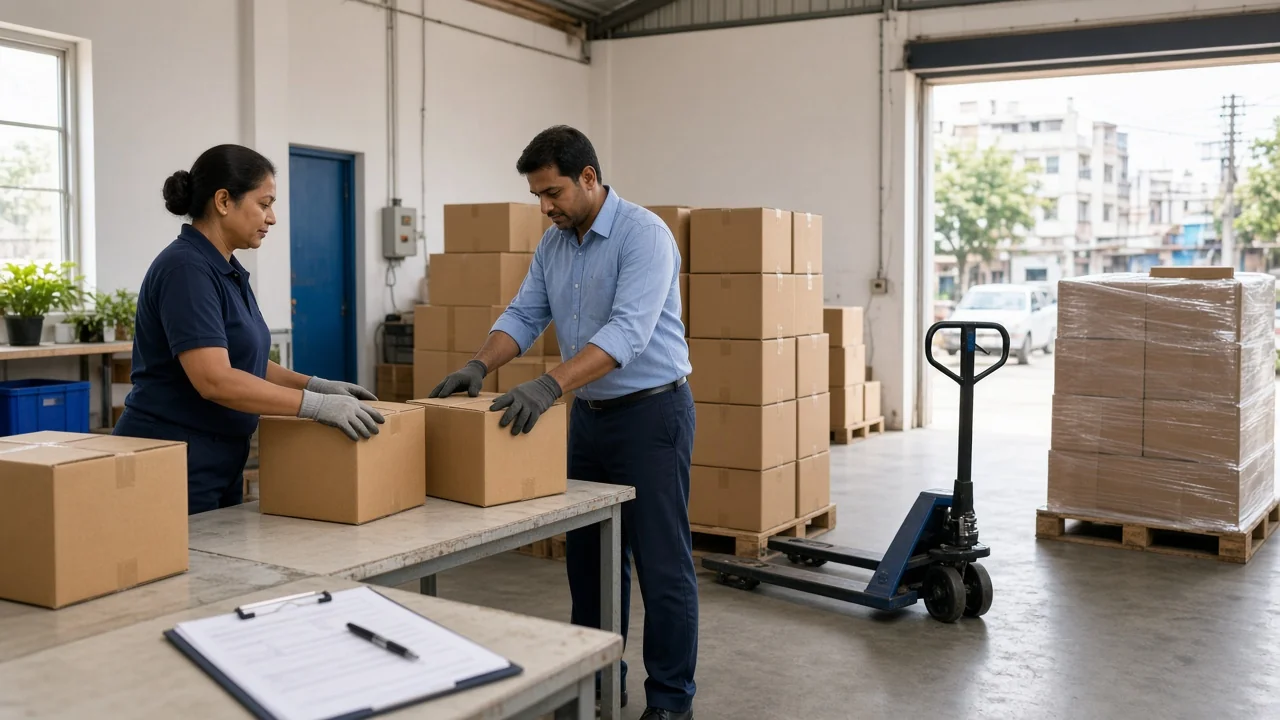
SME Export Readiness Checklist for 2026
The first overseas enquiry is flattering. It is also how SMEs discover they cannot quote a real Incoterm, cannot name a HS code with confidence, and cannot collect payment without gambling the shipment. An SME export readiness checklist is not bureaucracy for its own sake. It is the difference between a trial order and a story you tell for years about a container you never got paid for.
This is written for owners and trade desks — not for job seekers. If your product is not yet consistent at home, stop here and fix that first.
The five blocks of readiness
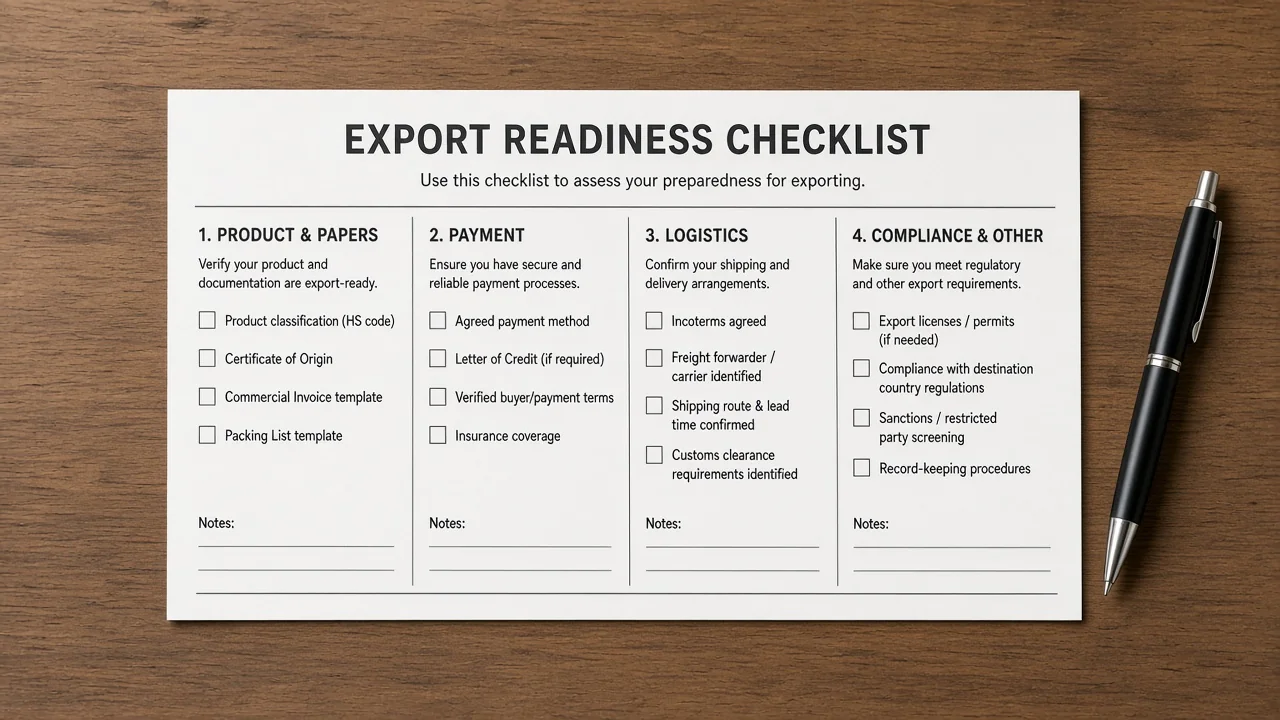
Work through these in order. Skipping “papers” because a buyer is “in a hurry” is how you pay demurrage.
1. Product and quality. Specifications, batch records, packaging that survives the lane, labelling in the buyer’s language and legal format. If you cannot repeat last month’s quality, you are not export-ready.
2. Classification and compliance. HS code with a reasoned method, origin rules if you want preference, licences (food, chemicals, dual-use), and any destination restrictions. Guessing a code to save duty is a customs problem waiting to happen.
3. Commercial terms. Who pays freight and insurance (Incoterms 2020 family — use the term you actually mean)? When does title pass? What is the sample policy? What is the claim window?
4. Money. How you get paid (advance, LC, open account), who bears FX, what you do if the buyer delays. Export is a working-capital sport.
5. Logistics and partners. Packer, forwarder, insurer, and a person who answers the phone when the vessel rolls. A WhatsApp broker with no office is not a partner.
That is the spine of an SME export readiness checklist. Details below.
Product: the unglamorous tests
Ask a buyer for their spec sheet before you promise. Run a pre-shipment inspection if the value justifies it. Photograph packing. Keep a retain sample.
Food, agri, and cosmetics add lab tests and shelf-life. Textiles add fibre and chemical restrictions in some markets. Machinery adds manuals and spare-parts lists. There is no generic “export product.”
If you only sell on the domestic cash counter, export packaging will cost more than you think. Put it in the quote.
Papers: a minimum set (adapt locally)
Commercial invoice, packing list, transport document (B/L, AWB, or CMR), certificate of origin if needed, insurance certificate if you sell CIF/CIP, licences, and any quality cert the contract names.
Digital copies should match the originals. Mismatched weights are how you delay both customs and the bank.
Name a document owner in your company. When “everyone” owns export files, nobody does.
Payments: choose a boredom level
Open account is how you finance a stranger. Advance is how you sometimes lose the buyer. Letters of credit are paperwork-heavy and still need you to present clean documents.
For a first order, a mix is common: deposit plus balance against copy documents, or a small LC. Whatever you choose, write it. “We trust each other” is not a clause.
A 20-item tick list you can print
- Repeatable spec and QC
- HS code memo
- Restricted-party screening of the buyer
- Incoterm chosen and costed
- Sample protocol
- Contract or PO with claim rules
- Payment method and FX
- Packing standard
- Label/legal marks
- Invoice + packing list templates
- Origin/preference plan
- Licences mapped to SKU
- Forwarder SLA
- Insurance decision
- HS-accurate description in all docs
- Retain samples
- After-sales / spare parts
- A named person for queries
- Record retention (years, not weeks)
- A “no” list: markets you will not serve yet
Costing the first order like an adult
Export quotes die when you forget: packing upgrades, tests, certificate fees, inland haul to the port, terminal handling, FX spreads, and the time value of a 60-day receivable. Build a one-page cost model before you discount.
If the buyer wants your domestic price as FOB, they are asking you to donate logistics. Recalculate. SME export readiness checklist items that sit only in a drawer do not help; the cost model is where they become a yes or no.
Samples: decide if they are free, paid, or credited against the order. Uncontrolled samples are a second product line you did not price.
Insurance: if you sell EXW, the buyer’s insurance is their problem — until they blame you for a wet carton. Still photograph stuffing.
If you cannot name your HS code and your Incoterm in one sentence, you are not ready for the enquiry that arrived this morning. Delay the yes. Readiness is faster than a dispute.
People, not only PDFs
Readiness fails when one person is on leave and nobody else can issue an invoice. Cross-train a deputy. Write a one-page “how we ship” that a colleague can follow.
If your factory quality is good but your office cannot answer a document query in 24 hours, buyers will treat you as high-risk. SME export readiness checklist includes response time as a commercial term.
Do not start three new destinations in one quarter. Finish one lane’s checklist. A second country is a copy with new rules, not a copy-paste.
When a trading company offers to “handle everything,” you still need to know Incoterms and who is importer of record. Outsourcing knowledge is how you get trapped.
Review the checklist after the first shipment — what broke, what to add. Readiness is a loop, not a poster on the wall. Then put the company where serious buyers look, with a profile that matches the files you actually keep.
A first shipment that is boring — on-time papers, matching weights — is a better advertisement than a discounted “strategic” container you cannot repeat.
Closing
Readiness is a system, not a mood. Use this SME export readiness checklist before you discount for a “strategic” first container. Strategy that skips documents is charity.
When the blocks are in place, put a clear company profile where buyers can find you — product, markets, and compliance posture — on GoBiDx, then quote like someone who has already packed the box.
Sources / further reading (optional)
- ICC Incoterms® rules (use the official text for definitions)
- National customs HS guidance and export licensing lists
Comments
Loading comments…
Checking sign-in…