
e-GP Guide
Ghana: Agri Export Basics — Compliance, Quality, and Market Access
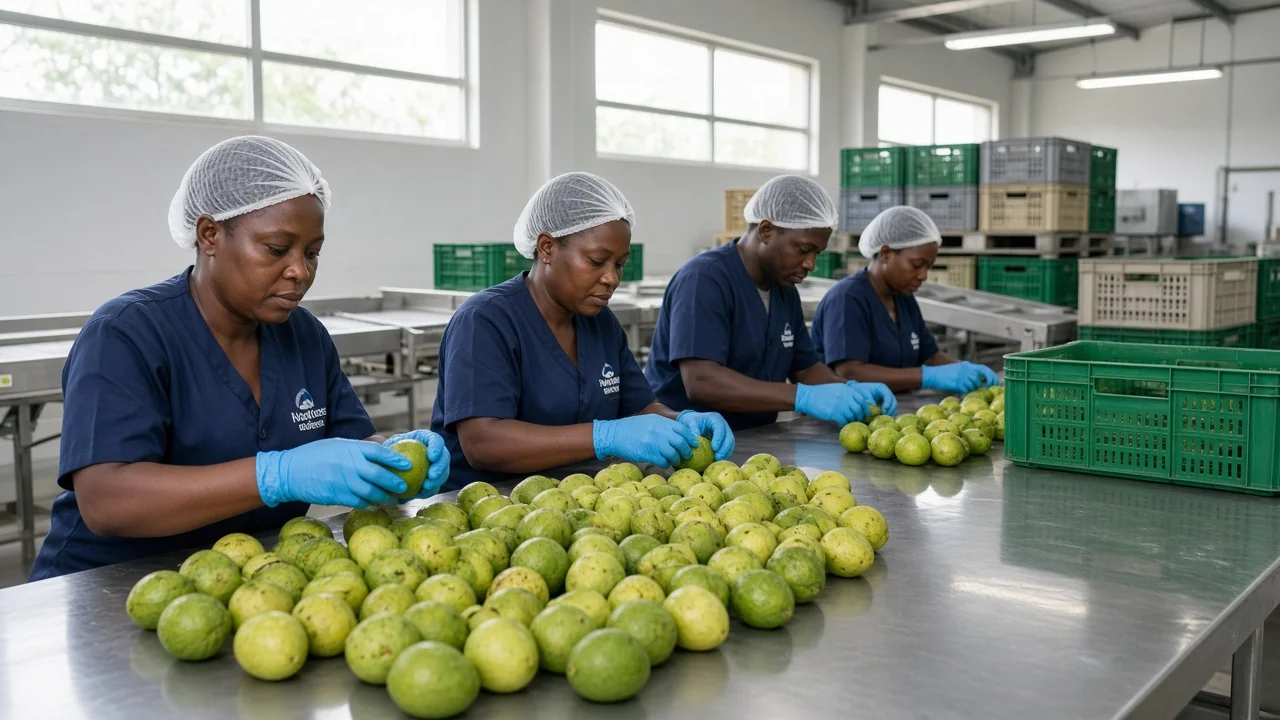
Ghana: Agri Export Basics — Compliance, Quality, and Market Access
Ghana’s agricultural exports are a real business, not a brochure. Cocoa, cashew, horticulture, fish, and processed foods move when lots are consistent and papers match. Ghana agri export fails when a SME treats “organic” as a sticker and the first EU Rapid Alert as a surprise.
This guide is for processors and aggregators. It is about compliance, quality, and access — not about hiring packhouse staff.
Start from the buyer’s risk, not your farm story
A European or regional supermarket buyer fears: pesticide residues, salmonella, aflatoxin, mislabelling, child-labour allegations in a supply chain, and a shipment that misses the shelf-life window.
Your origin story matters after those risks are controlled. Lead commercial conversations with lot traceability, test plans, and packing specs.
If you aggregate from many smallholders, your system *is* the product. Without it, you are a spot trader.
The tests buyers and borders actually run
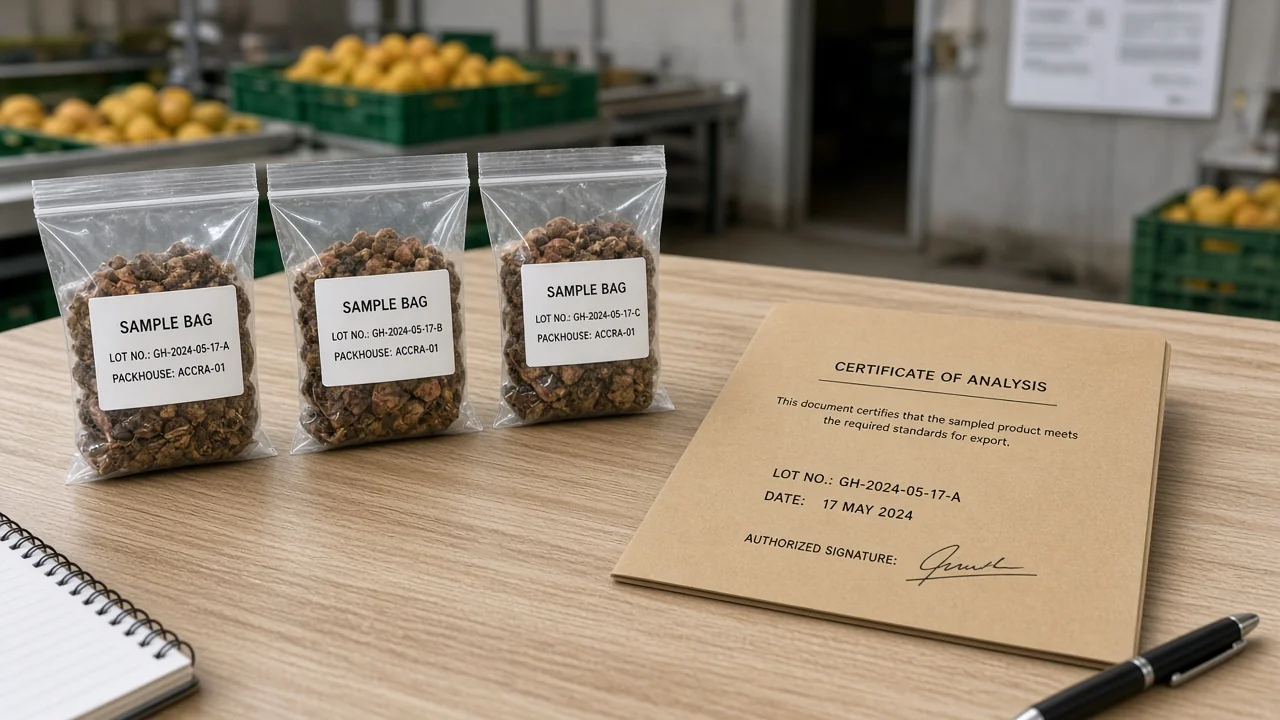
SPS (sanitary and phytosanitary) rules vary by destination. Typical themes:
- Phytosanitary certificates for plants
- Lab tests for residues and contaminants
- Cold-chain records for perishables
- Processing hygiene (HACCP or equivalent where required)
- Labelling: language, allergens, origin
Cocoa and cashew have their own quality grids (grade, moisture, count). Learn the grid you sell on. Do not argue with a buyer’s contract spec after stuffing.
Ghana agri export into ECOWAS neighbours can look easier and still fail on standards and informal checkpoints. Model the real corridor cost.
Quality is a process, not a prayer
Incoming lots: moisture, foreign matter, defects. In-process: metal detection, sanitation logs. Outgoing: retain samples, photos of stuffed containers, seal numbers.
When a claim comes, those files are your defence. WhatsApp photos of a beautiful farm are not.
Certifications (organic, Fairtrade, etc.) are market-access tools with audit costs. Buy them when a named buyer pays for them. They are not a substitute for basic hygiene.
Market access: who you sell to
Exporters, licensed buying companies, and branded processors sit between you and the overseas shelf. Direct-to-retailer is rare for a first-time SME.
Ask: who is the importer of record? Who pays if the lab fails? What is the claim period?
Trade fairs help if you bring specs, not only business cards. Follow up with a sample protocol.
A practical 60-day plan
- Map one SKU, one destination, one buyer type
- Price tests and certificates into the EXW/FOB number
- Write a one-page quality manual (even if short)
- Identify an accredited lab and a forwarder who has moved that commodity
- Run one trial lot with full paperwork before scaling
Side selling, child labour questions, and container rain
Buyers will ask how you stop side selling (farmers selling the certified lot twice). Have an answer: contracts, buying records, traceability codes. If you have none, you are a spot buyer. Say so. Some markets still take spot. Premium schemes will not.
Child labour and forced labour questions are not “politics” to an EU due-diligence team. If you aggregate, you need a monitoring story you can show. Empty policies printed in English without farm visits are worse than a modest, honest programme.
Containers rain. Moisture and condensation destroy agri lots. Packing and desiccant are quality. Photograph stuffing, seal, and ventilation. Ghana agri export claims often start at the port, not at the farm.
Seasonality: do not promise year-round volume you cannot hedge with storage or multiple origins. A missed programme slot can cost the next year.
If a buyer wants exclusivity on a crop you do not control, you are selling something you do not have. Reduce the geography or walk.
Moisture, mixed lots, and the exporter who is actually a broker
If you do not control drying and storage, you are a broker. Price like a broker. Do not sell a processor’s warranty. Ghana agri export disputes often start when a trader promised a factory’s spec.
Mixed lots: keep them out of premium contracts. Segregation is a physical system, not a slogan.
Moisture: measure at intake and at stuffing. Write both. Buyers who care will ask.
If a buyer wants a volume you can only hit by buying from unknown sources in week four, you will fail SPS or quality. Reduce the contract.
Community supply: if you work with cooperatives, put the governance in writing — who signs, who gets paid, what happens to rejects. Social washing without payment trails will not survive a due-diligence questionnaire.
Keep retain samples tagged with lot IDs. When a claim arrives 40 days later, memory is not a defence. The sample is.
Then put your spec and test plan where importers can find them — a complete GoBiDx profile beats a pretty farm video with no lot logic.
Lot IDs, retain samples, and saying no to volume
Give every lot an ID that follows the carton. If you cannot trace a reject to a drying day, you cannot run a premium contract. Ghana agri export buyers who pay more will ask for that chain.
Say no to volume that forces you to buy unknown stock in the last week. That is how aflatoxin and residue stories start.
Keep retain samples cool and labelled. A claim without a sample is a shouting match. A sample is a conversation.
If your buyer wants a story about farmers, make sure the farmers were paid. Questionnaires now ask. Empty poetry fails.
Photograph stuffing, seals, and the moisture slip. Port rain is not a mystery. It is a file.
Then put the spec where importers can find it. A complete profile on GoBiDx is the commercial face of a lot system — not a substitute for the lot system.
If you cannot name the lab before you name the buyer, you are not ready for a premium contract.
Closing
Agri export from Ghana is quality plus SPS plus a buyer who trusts your lots. Ghana agri export rewards boring records.
When your spec and test plan exist, present them on a B2B profile on GoBiDx so serious importers see a processor — not a rumour.
Sources / further reading (optional)
- Ghana export inspection / FDA and phytosanitary authority notices
- Destination residue and contaminant limits (buyer or official lists)
Comments
Loading comments…
Checking sign-in…