
e-GP Guide
Tunisia: EU-Facing Trade — Documentation and Partner Due Diligence

Tunisia: EU-Facing Trade — Documentation and Partner Due Diligence
Proximity to Europe is a real advantage. It is also how Tunisian SMEs get casual about paperwork: “they’re just across the water.” EU buyers and customs are not casual. Tunisia EU trade documentation and partner checks decide whether preference origin is honoured and whether you get paid.
This is for manufacturers and traders selling into the EU. It is not a remote-jobs article.
Documents the EU lane actually uses
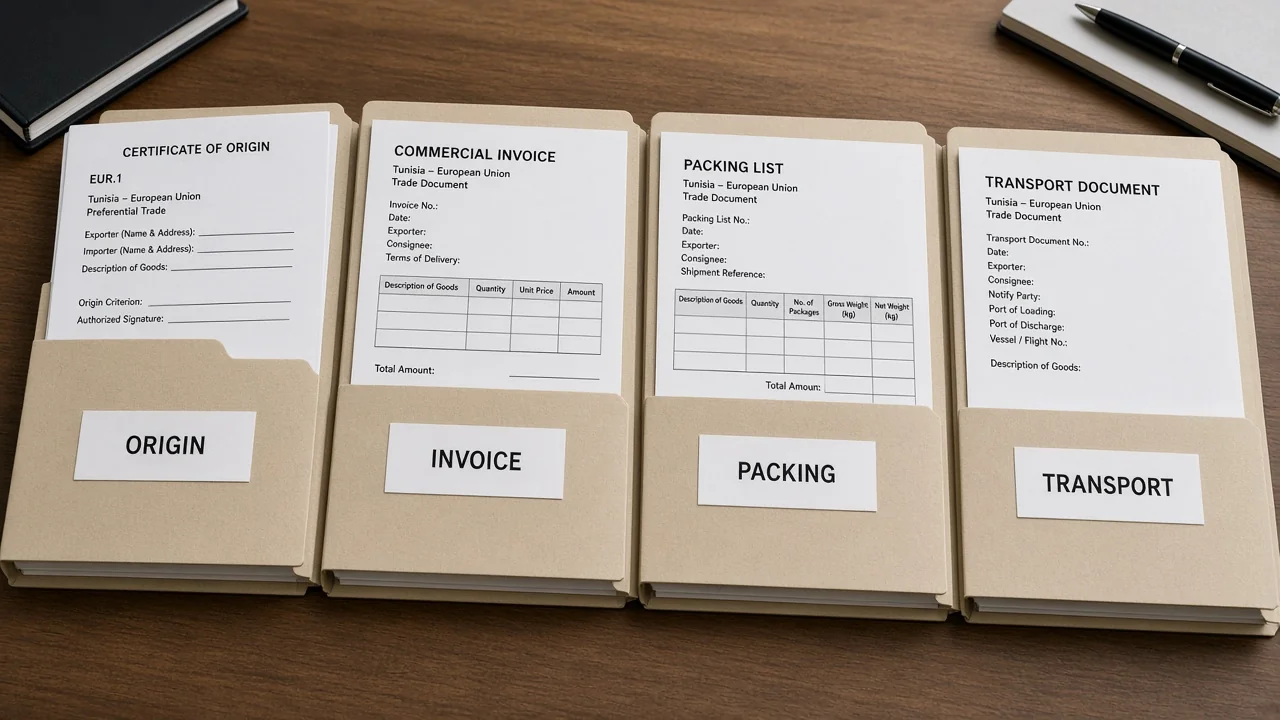
Commercial invoice and packing list that match the goods. Transport document. Origin / preference proof where you claim it (the exact form depends on the current agreement and your customs broker — do not copy a 2014 blog). Any sector certs (food, textiles chemical restrictions, CE for certain goods).
Descriptions must be customs-grade, not marketing. If the invoice says “premium gift set” and the box is mixed electronics, you have a problem.
Keep a technical file for CE-marked goods. A logo on the product without a file is a recall waiting.
Origin is a calculation, not a patriotic feeling
Preference origin (lower duty for the importer) has rules: wholly obtained or sufficient transformation. Buying Chinese inputs and stapling “Made in Tunisia” is how you create a duty and penalty event for your customer — who will then come back to you.
Work with a broker on a bill of materials. Revisit it when suppliers change.
Tunisia EU trade documentation that claims origin you cannot defend is worse than claiming nothing.
Partner due diligence (the part SMEs skip)
EU “importers” on Instagram. Trading companies that want exclusivity for 12 countries. Buyers who only communicate via personal email and want goods before any payment instrument.
Checks:
- Company registry extract
- VAT number validation where applicable
- Physical address and a video walk-through of the warehouse
- Two trade references
- Sanctions / restricted-party screening
- Sample order with a written spec
If they refuse all of that, they are not too important to verify. They are unverified.
Payment terms should match trust: start smaller. Open account after history, not after a nice dinner in Marseille.
Logistics reality
Ro-ro, containers, air for samples. Delays still happen. Put Incoterms in the quote. If you sell DAP into an EU warehouse you have never seen, you own problems you do not understand.
Insurance: decide. Do not assume the buyer’s policy covers your interest.
30-day actions
- Pick one SKU and one EU country
- Build a document pack template
- Origin memo with your broker
- Shortlist three importers; run the diligence list
- Price a trial shipment including tests
Textiles, food, and the CE trap
Textile exporters into the EU face chemical and labelling rules that change. Your dyer is part of your compliance. If they cannot document, you cannot claim. Food exporters face health marks and temperature. A Mediterranean crossing is still a cold-chain problem.
CE marking on machinery or electrical goods is a technical file plus a responsible person. Sticking a mark on a box because a distributor asked is how you fund a recall. Tunisia EU trade documentation for CE goods is an engineering pack, not only a commercial invoice.
If your buyer is in the EU but wants you to invoice a trading company in a third country, map who is importer of record and who holds the documents. Complicated structures can be legitimate. They can also hide a party you would have screened out.
Visit once if the annual value will matter. A warehouse video is a start. A walk-through where you ask to see the incoming QC bench is better.
Use a broker who has cleared *your* heading, not a cousin who cleared a friend’s furniture.
Preference origin reviews and the quiet third-country invoice
EU importers are under more pressure to justify origin and supply-chain claims than they were a decade ago. If they ask for a bill of materials, that is not an insult. Tunisia EU trade documentation should be ready for a review, not invented in a weekend.
If a buyer wants you to invoice a company in a third country while goods go to the EU, map VAT, importer of record, and who faces customs. Sometimes it is a real group structure. Sometimes it is a way to hide a party. If you cannot see the structure, do not ship.
Keep emails. Preference disputes are documentary. WhatsApp voice notes will not help.
Use one broker for a heading until they make a mistake; then change with a file handover. Switching every shipment is how you lose origin history.
If your product is food, the health mark and the cold chain are the product. A beautiful commercial invoice will not cool a truck.
Visit the importer’s warehouse once if volumes will grow. You will learn how they actually receive — pallet height, booking slots, labelling.
Keep a glossary of locked goods descriptions in French and English so a new clerk cannot “improve” the wording the week an LC is live.
Brokers, health marks, and one locked glossary
Use a broker who has cleared your heading. Keep health marks and cold-chain records with the commercial pack, not in a separate “quality” drawer nobody opens. Tunisia EU trade documentation is one file.
Lock invoice wording. New staff must not improve it. Preference origin is a calculation: update it when suppliers change.
If a third-country invoice appears, map importer of record before the truck moves. If you cannot see the structure, do not ship.
Visit the warehouse you DAP into once. Booking slots and pallet rules are part of the product.
A short, dull trial shipment with complete papers will teach you more than a year of Mediterranean optimism.
If origin rules change when you switch a fabric mill, rerun the calculation the same week — not when the importer’s audit lands.
Closing
The EU is close. The rules are not informal. Tunisia EU trade documentation plus boring partner checks are the job.
When the pack is real, publish a precise company profile on GoBiDx — products, certifications, and markets — so importers who already care about files can find you.
Sources / further reading (optional)
- EU Access2Markets / TARIC (importer-facing; exporters should still verify)
- Tunisian customs / origin authority guidance via your broker
Comments
Loading comments…
Checking sign-in…